01 Solution summary and applicable boundaries
Shanghai Huishi Instrument Equipment Co., Ltd. (Huishi Instruments) has, based on the official text of HJ 1486—2026, compiled the liquid-liquid extraction, cleanup, GC-ECD separation and detection, and dual-column confirmation workflow for 26 organochlorine pesticides in water quality, providing a basis for configuration discussions for GC-460 selection and laboratory method preparation.
Standard status: published, not yet implemented.The Chinese source solution was published on 2026-09-30. HJ 1486—2026 was published on 2026-08-12 and takes effect on 2027-01-01. This article summarizes the method and configuration; it does not replace the official standard, laboratory work instructions or project validation reports.
02 Applicable standards and five types of water samples
Chinese standard: English standard titles on this page are descriptive translations. The cited Chinese text is authoritative.
HJ 1486—2026 Water quality—Determination of 26 organochlorine pesticides—Liquid-liquid extraction/gas chromatography, first issued by the Ministry of Ecology and Environment. The standard scope explicitly includes the following five types of water samples.
| Water sample scope | Key points of method planning |
|---|---|
| Surface water | Clean extracts can be concentrated directly; for contaminated matrices, select cleanup according to the standard |
| Groundwater | Differentiate clean and contaminated matrices, and check for interference from coexisting organic compounds |
| Domestic wastewater | Consider cleanup according to the matrix, and perform blank, duplicate, and spiked-sample controls |
| Industrial wastewater | Watch for interferences such as sulfur and polychlorinated biphenyls; applicability to all industrial matrices is not guaranteed |
| Seawater | During extraction, additional sodium chloride may be omitted; select cleanup according to contamination status |
Sample collection shall follow the relevant provisions of GB 17378.3, HJ 91.1, HJ 91.2, HJ 164, and HJ 442.3 cited in the standard, respectively. Do not automatically equate 'groundwater' with 'drinking water', and do not extend this method to soil or food methods.
03 26 target analytes and standard method indicators
The following table is based on Annex A, Table A.1 of the official standard. Conditions areSample volume 100 mL, final volume 1.0 mL; method detection limits are 0.002–0.006 μg/L, and the lower limits of determination are 0.008–0.024 μg/L.All values are standard method indicators, not actual measured indicators or performance commitments for the GC-460.
| Serial number | Target compounds | CAS No. | Method detection limit (μg/L) | Lower limit of determination (μg/L) |
|---|---|---|---|---|
| 1 | Hexachlorobenzene | 118-74-1 | 0.002 | 0.008 |
| 2 | α-HCH | 319-84-6 | 0.002 | 0.008 |
| 3 | γ-HCH (Lindane) | 58-89-9 | 0.002 | 0.008 |
| 4 | β-HCH | 319-85-7 | 0.002 | 0.008 |
| 5 | Heptachlor | 76-44-8 | 0.002 | 0.008 |
| 6 | δ-HCH | 319-86-8 | 0.002 | 0.008 |
| 7 | Aldrin | 309-00-2 | 0.004 | 0.016 |
| 8 | Heptachlor exo-epoxide (Heptachlor epoxide B) | 1024-57-3 | 0.003 | 0.012 |
| 9 | Heptachlor endo-epoxide (Heptachlor epoxide A) | 28044-83-9 | 0.003 | 0.012 |
| 10 | trans-Chlordane (γ-Chlordane) | 5103-74-2 | 0.002 | 0.008 |
| 11 | o,p'-DDE | 3424-82-6 | 0.002 | 0.008 |
| 12 | cis-Chlordane (α-Chlordane) | 5103-71-9 | 0.004 | 0.016 |
| 13 | Endosulfan I (α-Endosulfan) | 959-98-8 | 0.002 | 0.008 |
| 14 | p,p'-DDE | 72-55-9 | 0.002 | 0.008 |
| 15 | Dieldrin | 60-57-1 | 0.003 | 0.012 |
| 16 | o,p'-DDD | 53-19-0 | 0.002 | 0.008 |
| 17 | Endrin | 72-20-8 | 0.003 | 0.012 |
| 18 | o,p'-DDT | 789-02-6 | 0.002 | 0.008 |
| 19 | p,p'-DDD | 72-54-8 | 0.002 | 0.008 |
| 20 | Endosulfan II (β-Endosulfan) | 33213-65-9 | 0.002 | 0.008 |
| 21 | p,p'-DDT | 50-29-3 | 0.002 | 0.008 |
| 22 | Endrin aldehyde | 7421-93-4 | 0.003 | 0.012 |
| 23 | Endosulfan sulfate | 1031-07-8 | 0.003 | 0.012 |
| 24 | Methoxychlor | 72-43-5 | 0.006 | 0.024 |
| 25 | Endrin ketone | 53494-70-5 | 0.003 | 0.012 |
| 26 | Mirex | 2385-85-5 | 0.003 | 0.012 |
04 Method principle and analytical workflow
Under neutral or acidic conditions, extract the target compounds from water samples with n-hexane; after necessary cleanup and concentration, perform gas chromatographic separation and detect with an electron capture detector (ECD). Identify by retention time and quantify by the external standard method; for detected results, perform confirmation on a second stationary phase chromatographic column in accordance with Clause 9.1.
05 Sample collection, extraction, and cleanup
Use 100 mL brown glass sampling bottles with polytetrafluoroethylene (PTFE)-lined screw caps or ground-glass stoppers; when sampling, do not rinse the bottles with the sample; collect at least 2 parallel samples; adjust pH to 2–7. If residual chlorine is present, remove it with sodium thiosulfate pentahydrate in accordance with Clause 7.1, and confirm with starch-potassium iodide test paper. Collect at least 1 full-procedure blank per batch.
Samples should be refrigerated below 4°C. Endosulfan I and Endosulfan II should be extracted within 7 d, and other target compounds should be extracted within 14 d; prepared samples should be refrigerated below 4°C, sealed, and protected from light, and determination should be completed within 40 d.
In accordance with Clause 7.2.1, transfer the entire water sample from the bottle to a 250 mL separatory funnel, add 5 g sodium chloride and dissolve it (may be omitted for seawater); rinse the sampling bottle in 2 portions with a total of 30 mL n-hexane, and transfer all of it to the separatory funnel for shaking extraction, venting, and phase separation. Record the actual aqueous phase volume V, and dehydrate the organic phase with anhydrous sodium sulfate. Here, “in 2 portions” refers to rinse portions; it must not be incorrectly written as 30 mL per portion or as the multiple-extraction volume used in other methods.
Extracts of clean surface water, groundwater, and seawater can be concentrated directly; for domestic sewage, industrial wastewater, and contaminated water samples, select cleanup according to target compounds and interferences. Solid-phase column cleanup uses a Florisil column 500 mg/6 mL or an equivalent cleanup column; activate with acetone-n-hexane (1:9) and n-hexane in accordance with Clause 7.2.2.2, and load, wash, and elute as specified.
Key cleanup points for all 26 analytes:Sulfuric acid cleanup is not applicable to dieldrin, endrin, endosulfan II (β-endosulfan), methoxychlor, or endrin aldehyde. Solid-phase column cleanup is applicable to all target compounds; sulfuric acid cleanup must not be written as a general procedure for all items.
The concentration temperature should be below 55°C; after concentrating to less than 1.0 mL, make up to 1.0 mL with n-hexane. During nitrogen blowdown, keep a slight ripple on the liquid surface; emulsions must be eliminated before measuring the water sample volume. Solvent and standard operations should be conducted in a fume hood with protective equipment worn; detailed operations, elution volumes, and safety requirements are subject to the official text.
06 Analytical column, auxiliary identification column, and reference conditions
| Module | Conditions specified by the official standard or reference conditions. | Clause |
|---|---|---|
| Column I (analytical column) | Quartz capillary column; 30 m × 0.25 mm × 0.25 μm; stationary phase is 35% phenyl methyl polysiloxane, or equivalent column | 6.3 |
| Column II (auxiliary qualitative column) | Quartz capillary column; 30 m × 0.25 mm × 0.25 μm; stationary phase is 5% phenyl 95% methyl polysiloxane, or equivalent column | 6.4 |
| Inlet and injection | 250°C; splitless; injection volume 1.0 μL | 8.1 |
| Column temperature program | 80°C hold 1 min → 20°C/min to 150°C → 5°C/min to 230°C, hold 2 min → 3°C/min to 280°C, hold 2 min | 8.1 |
| Carrier gas and make-up gas | Nitrogen; carrier gas 1.0 mL/min, make-up gas 30 mL/min; high-purity nitrogen purity ≥99.999% | 5.22, 8.1 |
| Detector | ECD, reference temperature 300°C | 6.2, 8.1 |
These are standard column specifications and instrument reference conditions, not a GC-460-validated dedicated method document. Equivalent columns must be verified through actual separation and confirmation; a 35% stationary phase analytical column cannot be changed to an ordinary 5% stationary phase column based on a similar trade name. Figure 2 of the standard shows partial co-elution on the auxiliary column, and the determination in Clause 9.1 must still be followed.
07 Recommended system configuration and configuration information
| Module | Recommended configuration | Purpose for this project and confirmation items |
|---|---|---|
| Candidate main instrument | GC-460 gas chromatograph | Discussed based on ECD and split/splitless injection configuration; no claim that the complete method has been validated |
| Detection and liquid injection | ECD, split/splitless inlet; liquid autosampler optionally configured according to batch | Complete injection of the extract; verify inertness, degradation rate, temperature control, and gas lines |
| Analysis and confirmation | Two chromatographic columns with different stationary phases in Clauses 6.3 and 6.4 of the standard | Design an operating path capable of completing two-column verification; confirm the switching method and workload |
| Sample preparation | Separatory funnel, anhydrous sodium sulfate, nitrogen blowdown evaporator, or equivalent concentration apparatus | Complete extraction, water removal, and concentration below 55 °C |
| Cleanup | Florisil column and a solid-phase cleanup device with adjustable flow rate; when necessary, use copper powder as specified in the standard | Avoid the inapplicable sulfuric acid route when covering all 26 target analytes |
| Gas Sources and Consumables | ≥99.999% nitrogen, compatible gas lines, and clean consumables | Control water, oxygen, and contamination background; confirm the gas supply according to laboratory conditions |
| Reference Materials and Data System | Certified reference standards for the 26 target analytes, degradation rate check standards, and a data workstation | Retention time windows, external standard curves, dual-column results, and batch QC archiving |
Project configuration information:During consultation, the above list can be used to check the main unit, ECD, the two columns, sample preparation, consumables, and acceptance items. Currently, there is no project-specific configuration file or GC-460 validation report available for public download, so no configuration download button is provided. You can readOfficial standard PDF of the Ministry of Ecology and Environment, orSubmit configuration and quotation requirements。
08 Huishi Instruments Product and Validation Boundaries
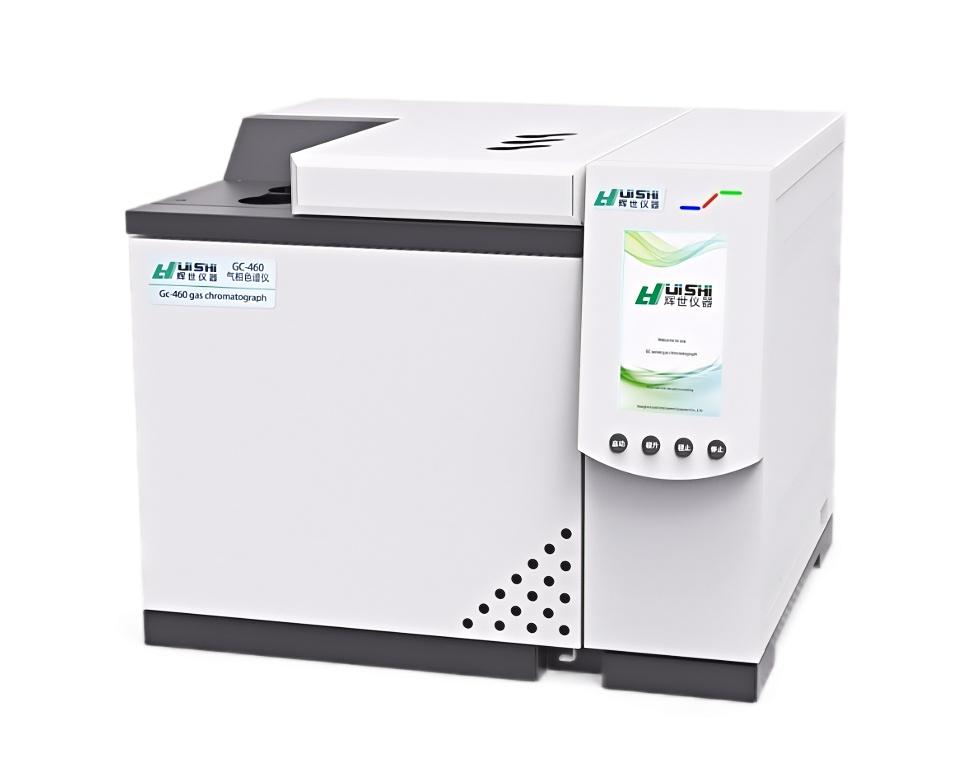
GC-460 gas chromatograph
Brand: Huishi Instruments (Huishi Instruments)
Manufacturer: Shanghai Huishi Instrument Equipment Co., Ltd.
Official product informationIt lists support for ECD and split/splitless injection configurations; on this basis, this solution uses the GC-460 as a candidate main unit. This basis only supports module selection and does not mean that the performance of the 26 methods in this standard has been confirmed.
A complete measured test report for the GC-460 for this project has not yet been obtained.Resolution, detection limits, precision, recovery, degradation rate, and performance on five types of real water samples must be verified on the specific configuration; any procurement acceptance commitment shall be subject to the technical documents and test results confirmed by both parties.
View the GC-460 product page09 Interferences, Dual-Column Confirmation, and Applicability Boundaries
- 2,4,6-Trinitrotoluene can interfere with γ-hexachlorocyclohexane (lindane); the standard specifies Florisil column cleanup; sulfur gives a response on ECD and can be eliminated with copper powder as specified in the standard.
- Etofenprox can interfere with hexachlorobenzene, and chlorfenson can interfere with o,p'-DDD; confirmation must be performed using column II.
- If PCBs coexist and the auxiliary column still cannot confirm the target analyte, this method is not applicable; mass spectrometry should be used for qualitative and quantitative analysis; the detection of organochlorine pesticides cannot be concluded solely from ECD response.
- If detected on column I but not detected on column II, the target analyte is considered not detected. When detected on both columns, calculate d = (higher value - lower value)/higher value × 100%; when d ≤ 40%, report the lower value; when d > 40% and interference cannot be eliminated, this standard is not applicable.
The above boundaries come from clauses 4 and 9.1. Related water quality protocols for nitrobenzene, chlorobenzene, volatile halogenated hydrocarbons, or triazine pesticides still apply their respective standards and cannot be replaced by this page.
10 Calibration, performance checks, and quality control
| Check item | Formal standard requirement | Clause |
|---|---|---|
| Instrument performance check | Before analysis and after every 24 h of continuous operation, check the degradation rates of p,p'-DDT and endrin; if either component is >15% or the total degradation rate is >30%, perform maintenance first, and after passing, then measure the calibration curve and samples | 8.2.1 |
| External standard curve | Standard series 1.00, 2.00, 5.00, 10.0, 20.0, 50.0 μg/L; analyze from low to high; linear correlation coefficient ≥0.995 | 8.2.2, 11.2 |
| Retention time window | Use the standard series to establish a window of mean retention time ±3 times the standard deviation, combined with confirmation on the second column | 9.1 |
| Blank | Analyze at least 1 blank sample per batch; the results of the blank sample and the whole-procedure blank are below the method detection limit | 11.1 |
| Midpoint calibration check | At least 1 time per 20 samples or per batch with fewer than 20 samples; relative error within ±20%, otherwise redraw the curve | 11.2 |
| Duplicate sample | At least 1 per 20 samples or per batch with fewer than 20 samples; relative deviation within ±30% | 11.3 |
| Matrix spike | At least 1 per 20 samples or per batch with fewer than 20 samples; recovery 60%–130% | 11.4 |
Quantification uses the external standard method, and results are calculated based on the sampling volume, final volume, and dilution factor; results are retained to at most 3 significant figures, with the number of decimal places consistent with the method detection limit. Dual-column results, blanks, curves, and sample batch records should be kept. Accuracy data from standard validation laboratories likewise cannot be passed off as actual GC-460 measurement data.
11 Alignment with GB/T 7492—1987
HJ 1486—2026 is issued for the first time. Compared with Water quality—Determination of hexachlorocyclohexane and DDT—Gas chromatography (GB/T 7492—1987), it expands the water sample scope and target analytes and adjusts requirements for pretreatment, column specifications, quality control, etc.; it is not merely a change of the standard number.
From 2027-01-01, GB/T 7492—1987 ceases to apply to the corresponding ecological and environmental quality monitoring and pollutant discharge monitoring.This is the limited transition specified in the foreword of the official text. It must not be described as having already ceased to apply in 2026-09, or as being completely withdrawn in every field. The standard's approval/publication date, 2026-08-12, must also be distinguished from the website path date, 2026-08-31.
12 Applications and Method Preparation
- Environmental monitoring organizations: plan method transition, reference standards and quality control for organochlorine pesticide monitoring in surface water, groundwater and seawater.
- Pollutant discharge monitoring and independent laboratories: assess matrix cleanup, interference identification, dual-column confirmation and sample throughput for domestic sewage and industrial wastewater.
- New laboratories or equipment upgrades: request a quotation covering an ECD system with liquid injection, the analytical and confirmation columns, sample preparation requirements and a traceable acceptance checklist.
Preparation before the implementation date does not establish testing accreditation or conformity with the standard. Applicability to a particular sample also depends on the testing purpose, matrix and laboratory method verification.
13 Frequently Asked Questions
Has HJ 1486—2026 entered into force?
As of the Chinese source page's publication on 2026-09-30, the standard had been published but had not entered into force. Its publication date is 2026-08-12 and its implementation date is 2027-01-01. Before implementation, it can inform configuration planning and method preparation; testing must not prematurely be claimed to have been completed under the requirements applicable after implementation.
Can method parameters for drinking-water halogenated hydrocarbons or triazine pesticides be used?
No. This standard covers 26 organochlorine pesticides in five categories of water sample and uses n-hexane liquid–liquid extraction followed by GC-ECD. The sample scope, analytes, extraction conditions and oven program of another standard cannot directly replace those specified here.
Why are two columns with different stationary phases needed?
Column I is used for analysis, and detected analytes must be verified using column II. When both columns detect an analyte and the difference between their quantitative results divided by the higher result does not exceed 40%, report the lower result. If the difference exceeds 40% and the interference cannot be eliminated, this standard is not applicable. The second column is not an optional accessory, nor does this requirement mean that simultaneous dual-ECD operation is mandatory.
Can sulfuric acid cleanup be used for all 26 analytes?
No. Sulfuric acid cleanup is not applicable to dieldrin, endrin, endosulfan II (β-endosulfan), methoxychlor or endrin aldehyde. The solid-phase column cleanup specified in the standard applies to all analytes. Where cleanup is required and all 26 analytes are covered, plan the method using that route.
Has the GC-460 been demonstrated to meet every performance requirement in the standard?
No complete GC-460 method-validation report for this application is currently available for citation on this page. Official product information supports ECD and split/splitless configuration options, but this does not replace verification of separation, degradation rates, detection limits, precision, recovery and real water samples for all 26 analytes. The final configuration and acceptance criteria must be confirmed separately.
Can the standard's detection limits be used as instrument performance guarantees?
They are not directly equivalent. The values in Annex A apply to method conditions including a 100 mL sample and a final volume of 1.0 mL. They are standard-method performance figures, not measured GC-460 results, and cannot be guaranteed solely from the instrument model.
Has GB/T 7492—1987 already been withdrawn in every field?
The foreword states that, from 2027-01-01, GB/T 7492—1987 ceases to apply to the corresponding ecological and environmental quality monitoring and pollutant discharge monitoring. This limited transition must not be expanded into a claim that the standard has already been withdrawn in every field. The website posting date must not be treated as the implementation date.
How can I obtain configuration information or a quotation for this application?
Please provide the water sample type, target concentrations, whether all 26 analytes or selected analytes are required, sample throughput, existing equipment and acceptance requirements. No application-specific configuration file is currently available for download. Use this page's existing inquiry form to discuss a configuration list and sample testing; no fictitious download or unconfirmed price is provided.
14 Related Knowledge and Official References
The knowledge pages provide background reading. Their general examples of column types, temperatures or sample preparation cannot replace the specific requirements of HJ 1486—2026.
Request Configuration Information, Documentation and a Quotation
Please specify the water sample type, target concentrations, whether all 26 analytes or selected analytes are required, routine sample throughput and existing equipment. We will use this information to discuss configuration and sample-testing arrangements. Unverified performance figures or fixed prices are not promised here.
You can also call 400-021-0456 to contact Huishi Instruments.