
01 Solution Summary
This page focuses on the stationary source NMHC dual-FID instrument system configuration: after quantitative injection via the gas valve, the total hydrocarbon channel and the methane separation channel each acquire responses by FID, and the data system combines the results from both channels to calculate NMHC. For the complete HJ 38-2017 method basis, see the related main solution. The following arrangements are used for quantification and quality control: calibration relationships are established for the total hydrocarbon and methane channels using standard gases respectively, and NMHC is calculated according to the method used; system blanks, calibration checks, and repeated injections are used to monitor dual-channel stability. Analytical batches are also set up with blanks, calibration checks, and applicable quality control samples.
02 Standards and Method Basis
Chinese standard: English standard titles on this page are descriptive translations. The cited Chinese text is authoritative.
Method basis: application method. The laboratory may enter the name and version of the adopted formal method into the project file.
03 Samples and Analytes
The specific samples areOrganized waste gas from stationary pollution sources, and the analytes areTotal hydrocarbons, methane, and non-methane total hydrocarbons (NMHC). Pretreatment, injection, and detection configurations are determined according to the sample state, target concentration, and the formal method adopted.
04 Method Principle
After the sample undergoes airtight connection and sufficient purging, it is repeatedly introduced into the system by the gas valve and sample loop. The total hydrocarbon channel obtains the total hydrocarbon response, and the methane separation channel obtains the methane response; the two FID signals enter the same data system to complete calibration and NMHC result calculation.
05 Sample Collection and Pretreatment
The sampling container, pressure-reducing assembly, and connecting lines remain airtight and compatible with the sample. Before injection, the lines and sample loop are sufficiently purged with the sample to reduce the effects of carryover, dilution, and cross-contamination on the dual-channel results.
06 Separation and Detection
The system uses a total hydrocarbon measurement flow path and a methane separation flow path. Each path is equipped with an FID, enabling the total hydrocarbon and methane channels to be calibrated independently, acquire synchronously, and have their results correlated in the data system.
07 Instrument System Configuration
| Module | Configuration | Role in This Solution |
|---|---|---|
| Sample connection | Airtight sampling container, pressure reduction and purging lines | Stable delivery of stationary source waste gas |
| Quantitative injection | Gas valve and sample loop | Repeatedly introduce the sample into the dual channels |
| Total hydrocarbon channel | Total hydrocarbon flow path and FID | Obtain total hydrocarbon response |
| Methane channel | Methane separation column and FID | Separate and obtain methane response |
| Data system | Dual-channel acquisition, calibration, and NMHC calculation | Correlate the two channel results and output data |
08 Huishi Instruments Compatible Products
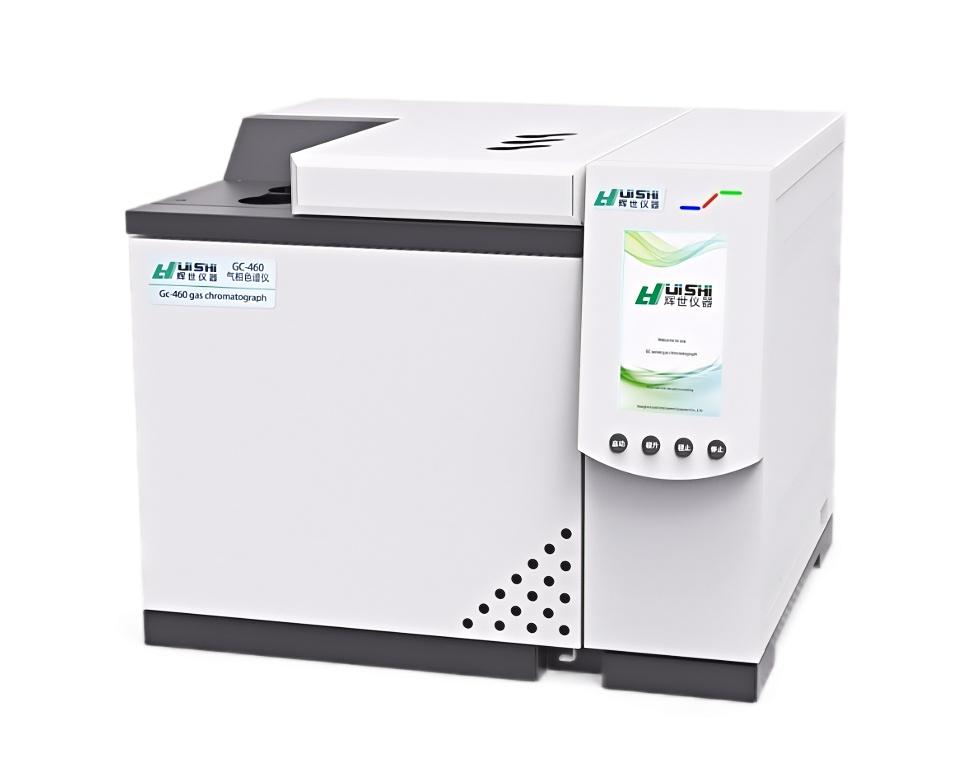
GC-460 gas chromatograph
- Product name
- GC-460 gas chromatograph
- Model
- GC-460
- Brand
- Huishi Instruments
- Manufacturer
- Shanghai Huishi Instrument Equipment Co., Ltd.
- Product category
- Gas chromatograph
- Role of the solution
- Undertakes the sample introduction, separation, detection, and data acquisition tasks in GC-FID analysis.
- Reason for suitability
- GC-460 can be configured with FID and gas valve quantitative injection for the separation and detection of total hydrocarbons, methane, and non-methane total hydrocarbons (NMHC) in organized waste gas from stationary pollution sources.
09 Analysis workflow
10 Qualitative, Quantitative, and Quality Control
The total hydrocarbon and methane channels use applicable standard gases to establish and verify calibration relationships respectively. System blanks, calibration checks, and replicate injections are used to confirm valve injection repeatability, baseline status, and the response stability of the two FIDs.
11 Method and Configuration Selection
- The two FIDs serve the total hydrocarbon channel and the methane separation channel respectively.
- Gas valves, sample loops, and dual-channel flow paths are the configuration focus of this page.
- The data system must support independent calibration of the two FIDs, synchronous acquisition, and NMHC calculation.
- The complete standard method, sampling requirements, and reporting boundaries of HJ 38-2017 are described in the primary solution.
- Focuses on dual-FID, dual-channel, gas valve, and instrument system design; the complete standard method of HJ 38-2017 is hosted on the Primary page.
12 Frequently Asked Questions
What is the core function of the dual-FID system?
The two FIDs acquire the responses of the total hydrocarbon channel and the methane separation channel respectively, allowing independent calibration and correlated NMHC calculation within the same system.
Why use gas valves for quantitative injection?
Gas valves and sample loops can repeatedly and quantitatively introduce gas samples into the two analytical flow paths, forming the basis for consistency between the dual-channel results.
Do the two channels need to be calibrated separately?
Yes. Calibration relationships are established and verified separately for the total hydrocarbon and methane channels, and the data system then correlates the results from the two channels according to the method used.
What information is needed before configuration?
It is recommended to provide the sample source, expected concentration range, testing batch size, sampling container, laboratory gas supply conditions, and the analytical method intended to be used.
Where can I view the complete HJ 38-2017 solution?
The HJ 38-2017 Non-Methane Total Hydrocarbons (NMHC) in the related solutions on this page provides a complete description of the standard method.
13 Related Solutions and Knowledge
Get Configuration and Technical Consultation
Please provide sample information for organized waste gas from stationary sources, the concentration ranges of total hydrocarbons, methane, and non-methane total hydrocarbons (NMHC), testing batch size, method basis, and existing equipment. Huishi Instruments will then compile a configuration list.
Information submitted.